Mission / Vision
École Père Mercure serves Fransaskois families from North Battleford, Battleford and area who are seeking a high-quality French first-language elementary and secondary education for their children. Guided by proven educational practices, our school is committed to helping every student thrive academically and personally.
Through enriched learning opportunities, strong family engagement, and the active involvement of the Fransaskois community, students develop a strong sense of Francophone identity, belonging, and pride while building the skills they need for future success.
Mission
École Père Mercure provides French-language education from Prekindergarten to Grade 12, following the curriculum established by the Saskatchewan Ministry of Education. The school serves children of Francophone parents and families who hold French-language education rights, offering a learning environment where students can grow academically, culturally and linguistically in French.

Vision
École Père Mercure strives to educate its students in the French language, foster Fransaskois culture, and convey the Christian values and the Catholic faith of its Francophone community. Its mission is to develop individuals who are open to the world and actively engagement in the growth and development of their community and country.
Welcome to École Père Mercure!
L’école Père Mercure est l’école francophone de la région des Battlefords depuis 1992. Notre école accueille les élèves à temps plein, de la prématernelle 4 ans jusqu’à la 12e année. De plus, nous partageons nos locaux avec le Centre éducatif Les Petits Pingouins, qui accueille les enfants dès l’âge de 18 mois. Grâce à son personnel dynamique et dévoué, notre école poursuit sa croissance tout en visant la réussite de chaque élève.
Les priorités scolaires sont définies dans notre Plan d’amélioration continue (PAC), qui s’appuie sur des efforts en littératie, en bien-être et en CLIC (construction langagière, identitaire et culturelle). Pour atteindre nos objectifs en littératie, nous misons sur les communautés d’apprentissage professionnelles (CAP). Ainsi, tous les membres du personnel enseignant collaborent afin de créer des évaluations communes et de partager des stratégies favorisant l’atteinte des objectifs en littératie à tous les niveaux.
Notre école tisse des liens étroits avec la communauté des Battlefords en profitant de ses nombreuses installations sportives : un centre aquatique moderne offrant des cours de natation, des patinoires, des installations de curling et de gymnastique ainsi que des terrains intérieurs de badminton et de soccer.
Nous avons également la chance de bénéficier de la proximité d’une station de ski alpin. Nous favorisons aussi l’épanouissement artistique des élèves en visitant les galeries d’art, en participant aux ateliers offerts et en assistant aux spectacles présentés au Centre d’art.
Sur le plan culturel, l’école profite de solides partenariats avec le Centre francophone des Battlefords, l’Association jeunesse fransaskoise, le Conseil culturel fransaskois et la Société historique de la Saskatchewan. Ces collaborations permettent aux élèves de participer à une grande variété d’activités culturelles. S’y ajoutent les activités organisées avec les autres écoles fransaskoises, telles que l’Omnium de volleyball à Saskatoon, le tournoi de balle-molle à Bellevue ainsi que diverses rencontres à Regina.
Venez nous rendre visite et découvrez par vous-même ce qui fait de l’école Père Mercure une école de qualité où votre enfant pourra apprendre, grandir et s’épanouir!
Au plaisir,

Massata Ndiaye
Our Team
At École Père Mercure, our team is committed to creating a welcoming, engaging, and nurturing learning environment where every student can thrive.
Meet the dedicated staff members who support our students throughout their academic, personal, and Francophone journey, helping them grow, succeed, and reach their full potential year after year.

Meet the staff at École Père Mercure
Baboucar Thiana
A Look Back at Our History
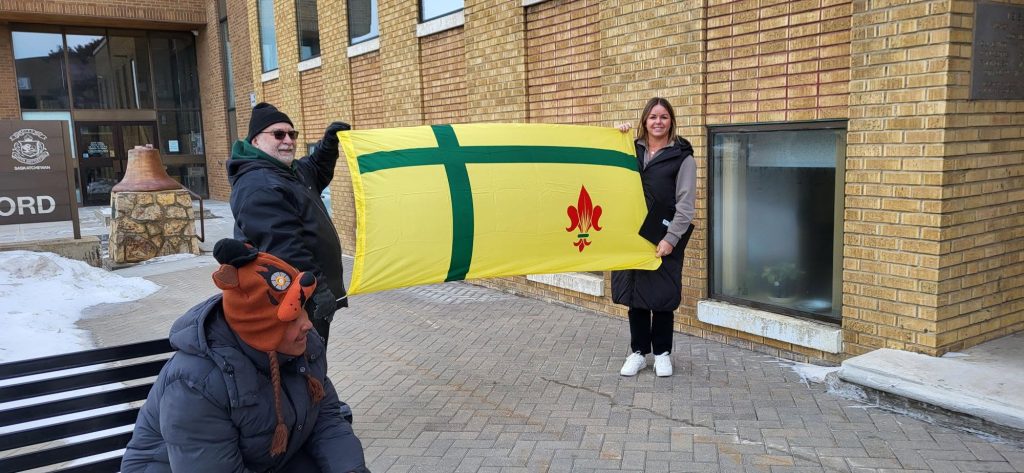
École Père Mercure was created in 1991 in answer to the needs expressed by Francophone families that sought an education better suited to their French first language aspirations. The school opened officially in 1992, initially at the Don Ross Centre, until 1999. That year, the Francophone school system acquired and renovated the old St-Joseph School, where École Père Mercure eventually moved. The school is named after Father André Mercure, a local priest and community leader who became a champion of Francophone linguistics rights after challenging the legality of a ticket issued to him in English only. That ticket made it all the way to the Supreme Court of Canada. This legal adventure became known as the “Mercure Case”. The Court agreed with Father Mercure that Saskatchewan was officially bilingual, but it allowed the province to pass a new law making English the official language, which it wasted no time doing. Yet, that Supreme Court of Canada decision helped clarify the status of Francophone rights in Saskatchewan. It became instrumental in allowing the Fransaskois to eventually manage their own schools – Francophone schools.
Studies have shown that Francophone schools are the best place for francophone students to get an education — and they will have the advantage being fully bilingual at the end. Enrollment in French first language education will lead to students self-identifying more readily as bilingual Francophones than if they attend immersion school. Francophone students spend the school day in an environment where day-to-day life occurs predominently in French. This includes school interaction with parents, between teachers and ultimately with the community at large. Students experience French as a language not only for going to school, but for their future workplace and life in general. Their proficiency in French will remain longer. It will be part of who they are.
Incidentally, because of the nature of the environment in which we live, proficiency in English is easily acquired by our students. They learn French first, but they acquire English just as fast. Our Francophone students end up developing as good a command of the English language as native English-speakers.
Governance
and policy
The Conseil scolaire fransaskois (Fransaskois School Board, or CSF) is made up of nine trustees elected from the province’s Francophone school regions. Each trustee represents a designated region of Saskatchewan and serves a three-year term.
The CSF provides governance and strategic direction for the Conseil des écoles fransaskoises (CÉF), ensuring that Francophone students across Saskatchewan receive a high-quality education in French. Much like the Boards of Education that oversee English-language school divisions, the CSF is responsible for setting priorities, making key decisions, and supporting the long-term success of the school division.
Your school board trustee
Oumnia Tahiri
- otahiri@cefsk.ca
Other members of CSF Board

Geneviève Binette
- gbinette@cefsk.ca
Roger Gauthier
- rgauthier@cefsk.ca

Nathan Poirier
- npoirier@cefsk.ca

Maria Lepage
- maria.lepage@cefsk.ca

Rosemarie Gelsinger
- rgelsinger@cefsk.ca

Michel Lepage
- milepage@cefsk.ca
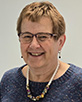
Monica Ferré
- mferre@cefsk.ca

Élizabeth Perreault
- eperreault@cefsk.ca
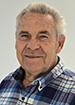
Guy Roberge
- groberge@cefsk.ca
Election to the Conseil scolaire fransaskois (School Board)
Interested in becoming a member of the Fransaskois School Board (CSF)? Consult the document below to learn about your rights, eligibility, and the election process:
- Election Regulations for the Conseil scolaire fransaskois.
For any additional questions pertaining to nominations, election timelines, voting information, or election results, please contact the Conseil des écoles fransaskoises (CÉF) Head Office at 1.877.273.6661.
Code of Ethics and Code of Conduct for School Board Members
The members of the Board and the Board as a whole are committed to maintaining the highest standards of ethical and professional conduct. Trustees are expected to act with integrity and in accordance with the Code of Ethics established by the Saskatchewan School Boards Association.
For more information, please refer to Policy 2.3: Code of Conduct in the Fransaskois School Board Policy Manual (Politique 2.3 sur le Code de conduite) in the Fransaskois School Board Manual (Manuel des politiques du Conseil scolaire fransaskois).
Conseil d’école (School Community Council)
Role and Responsibilities of the Conseil d’école
Each Fransaskois school elects a Conseil d’école (School Community Council) made up of a minimum of four and a maximum of nine members, depending on the school region. One of the elected members serves as the community representative and must be an adult member of the Francophone minority community residing within the school’s attendance area. The remaining members are parents or guardians of students enrolled at the school. All council members are elected by the school’s parent community.
The Conseil d’école represents parents and guardians by providing input and recommendations to the Conseil scolaire fransaskois (Fransaskois School Board, or CSF) and the Conseil des écoles fransaskoises (CÉF). Council members contribute to discussions, planning initiatives, and school development activities that support student success and the continued growth of French-language education.
Each council member is elected to a two-year term.
If you are interested in running in the next election, please contact the school principal for more information.
Meeting minutes are available upon request.